
ARCHIVED - LAST EDITED DEC 2025
Queenstown’s Electricity
Our growing population and increased focus on electrification (moving to appliances and cars that are powered by electricity rather than fossil fuels) means there’s more demand for electricity now, and there’ll be even more demand in the future.
SECTIONS
Forecasts are that our current electricity infrastructure won’t be enough to meet demand in the future, even with more homes switching to solar and the increase in solar and wind farms.
We need to find a reliable solution that can sit alongside solar and wind. Something that isn’t dependent on weather or the number of homes with household solar. And we need to start work on that now.
Here’s how electricity gets into the region today.
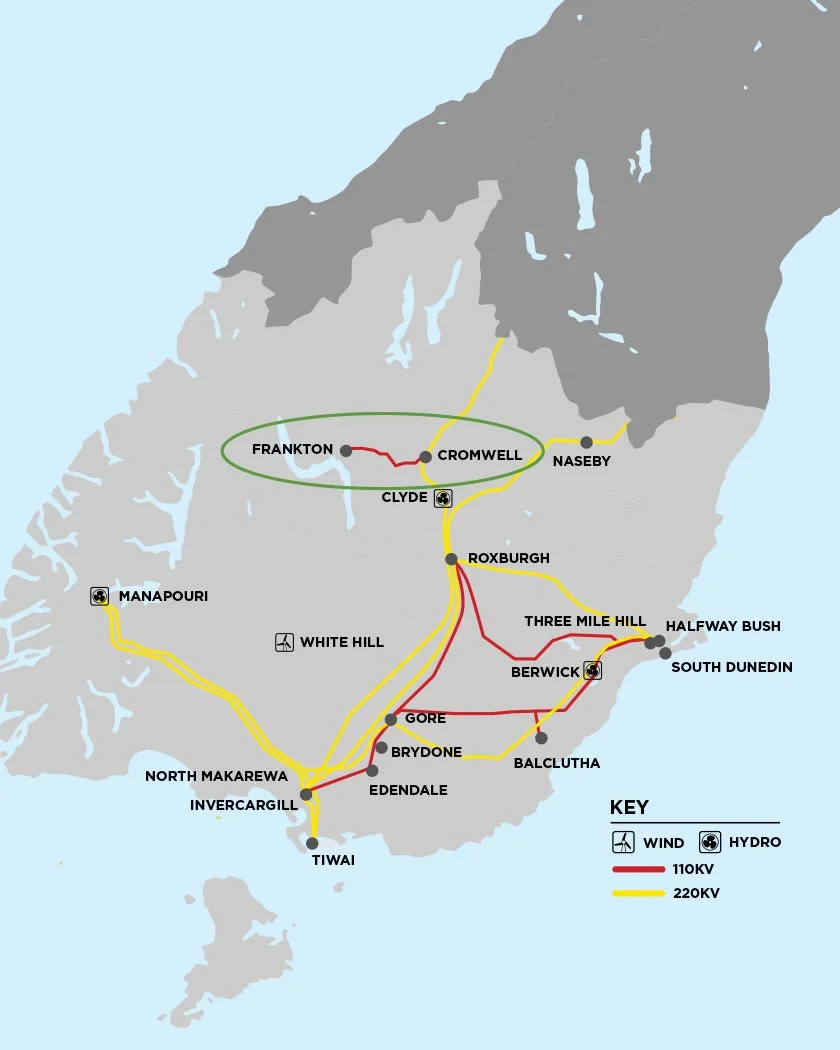
Queenstown gets its power from a 110kV transmission line that runs from Cromwell to the Frankton substation. This transmission line is owned by Transpower, the owner and operator of New Zealand’s national grid. Aurora Energy and PowerNet (who manages the Lakeland network) take this supply from the Frankton substation and distribute it to homes and businesses.
The current transmission line was constructed back in the mid-1970s, when the population was around 3,000. With the population now closer to 30,000, we know the line will struggle to supply enough electricity to Queenstown, Arrowtown and surrounding areas in the future.
Note: We have identified and carried out some upgrades to the transmission network that will increase capacity in the medium term. However, if demand for electricity exceeds that capacity, we’ll need another generation alternative (either from within the region, or transferred from large generating stations outside of the region).
Forecasting Queenstown’s
electricity and generation
If we want to come up with feasible electricity options to power Queenstown for the future, we need to understand the potential future demand in the region.
We’ve been working with the Queenstown Lakes District Council and Queenstown Airport to understand the trends and Queenstown’s aspirations for the future. This includes our ambition to become the world first carbon zero tourist region, forecasts for increases in economic activity and population growth estimates.
We’ve sought input from iwi and spoken to a range of other stakeholders (including Air New Zealand) to ensure a complete picture of electricity use in the region.
Scenarios
Using the information we’ve gathered, we have worked together to develop three scenarios for Queenstown’s electricity demand in the future. Each scenario is designed to explore future uncertainty and the range of potential growth trajectories for electricity demand in the region out to 2050.
The scenarios reflect the unique drivers of electricity demand in the Queenstown region, including the high visitor population, the strong population growth and the aspirations of the region to electrify.
All scenarios are compatible with the region’s net-zero ambitions, taking very high rates of vehicle, heating and cooking electrification, and the potential demand from electric aircraft and green aviation fuel, into account. The ability of the region to partially self-supply through rooftop solar generation is also considered in the scenarios.
Something else we have considered is peak electricity demand and factors that could influence it.
Queenstown region electricity usage scenarios for 2050:
For the minimum scenario we assume that the drivers of electricity demand growth are the minimum of the considered range. For example, this scenario assumes the slowest population growth and EV uptake, and the most ambitious rooftop solar uptake and energy efficiency improvements.
The maximum scenario assumes the drivers of electricity demand growth are the maximum of the considered range. This includes the fastest considered population growth, the fastest EV uptake, minimum rooftop solar and modest efficiency gains.
The midpoint scenario assumes that the drivers of electricity demand are the midpoint of the considered range.
Forecasting is inherently uncertain, but this approach should reveal the range of potential outcomes based on our current understanding of the drivers of demand.
We also considered the potential to reduce peak demand by electricity demand being flexible, and consumption being shifted away from peak times. The base scenarios assume demand is inflexible, and then the potential for smart charging of electric vehicles is considered as an extension.
The potential for flexibility is also being explored with current consumers in the region through a partnership between Ara Ake and Aurora Energy to explore how flexibility around electricity use can be improved.
Early feedback on the scenarios has been supportive, and this consultation is our opportunity to hear from a wider range of people from the region.
Demand forecasts
All of the scenarios we’ve put forward would see a significant increase in electricity demand in the Queenstown region.
Figure 1 below shows the increase in the annual electricity consumption for the midpoint scenario from the present day to 2050.
The most significant increases in demand are due to electrification of road transport, and residential and commercial base demand growth. Base demand growth can be thought of as more houses and commercial activity, which are consistent with the population growth assumed for the region. Rooftop solar is assumed to contribute significantly over the year, and this moderates the increase in electricity demand.
As we’ve mentioned, the timing of electricity consumption is what’s important for the electricity network.
Figure 2 & 3 shows the peak demand for each of the scenarios.
Winter and summer peak demand are shown out to 2050.
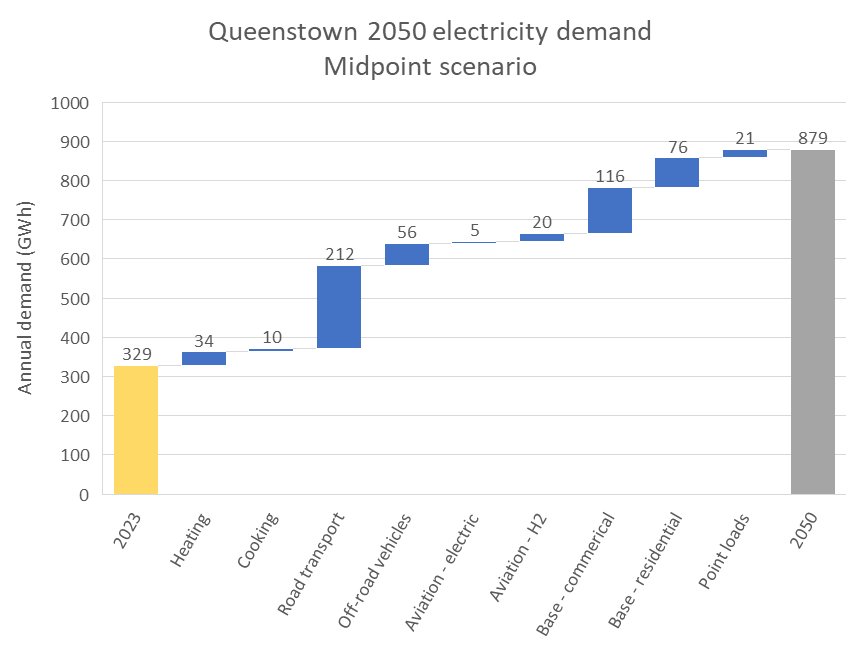
Figure 1: Annual electricity demand in the Midpoint scenario
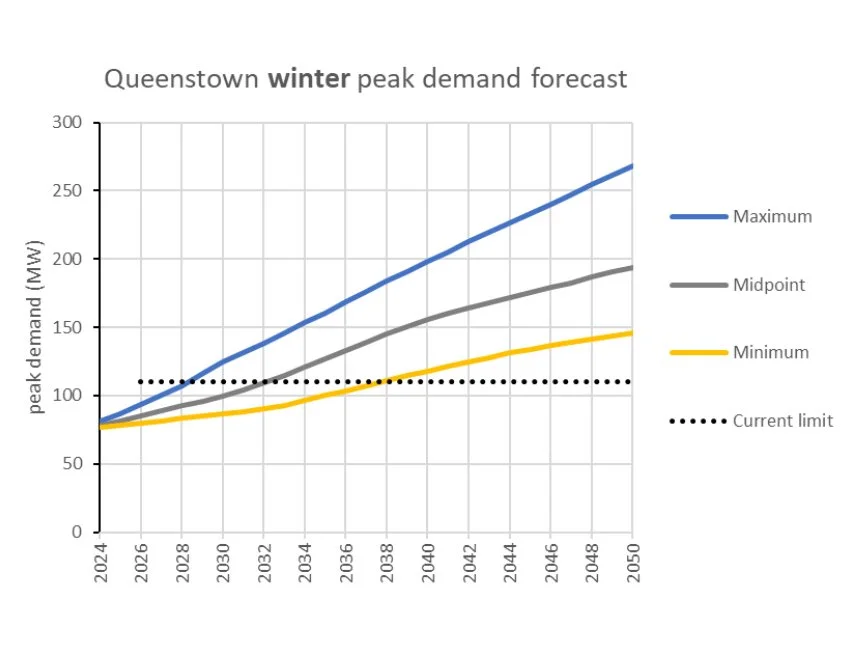
Figure 2: Queenstown/Frankton demand forecasts - WINTER
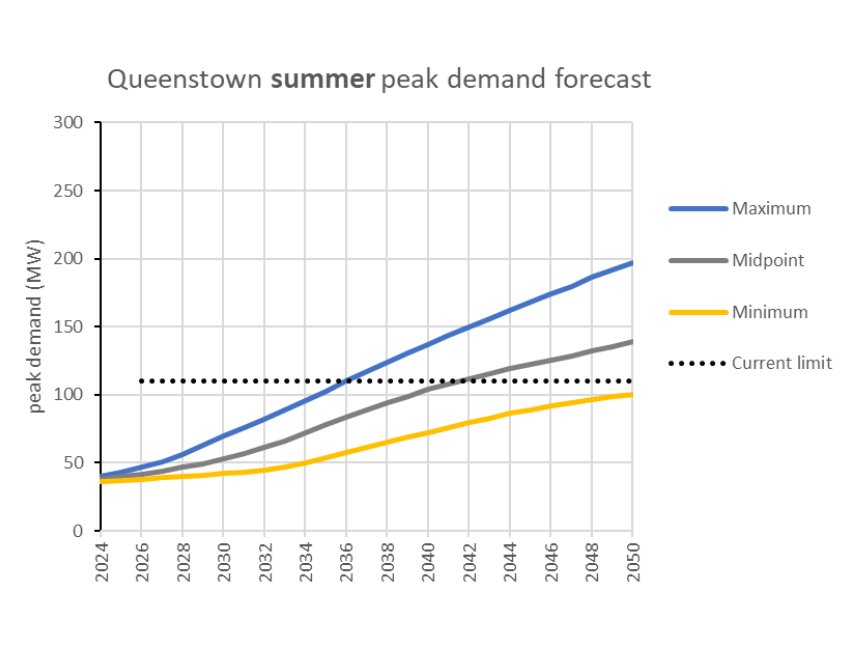
Figure 3: Queenstown/Frankton demand forecasts - SUMMER
The dotted line shows the capacity of the existing transmission network.
The forecasts show a range of outcomes between the minimum and maximum scenarios, with the 2050 peak load varying by approximately 100%. This reflects the underlying uncertainty in the future demand for the region and the sensitivity of the outcomes to the assumed growth drivers.
The transmission network requirements will be determined by the winter peak demand, which remains more significant than the summer peak due to the cold climate. Although there is considerable assumed solar generation in the scenarios, the output of this during winter is reduced, and the output does not align with consumption during the morning and evening peaks.
In all scenarios, peak demand exceeds the capacity of the current transmission network. The midpoint scenario would see winter demand surpassing current capacity in early 2030.
Flexibility
There is potential to reduce peak demand if there’s flexibility about when we use electricity.
We can reduce peak demand by using electricity at non-peak times of the day when we can, rather than everyone using it at peak times such as in the early evenings when many people are using electricity to heat their homes and prepare meals.
This has been considered as part of the demand forecasting. In particular, the potential for flexible EV charging, as this is a major contributor to the overall increase in demand in our forecasts.
For each of the scenarios shown above, we considered how we minimise the contribution EV charging makes to peak demand.
Moving EV electricity consumption away from the evening peak into overnight periods and during the middle of the day would result in a flatter peak day profile. A successful outcome may defer transmission investment for 2-4 years.
Although this kind of flexibility would slow electricity demand at peak times and defer investment, under all scenarios, our modelling shows the transmission network’s capacity would eventually be exceeded.
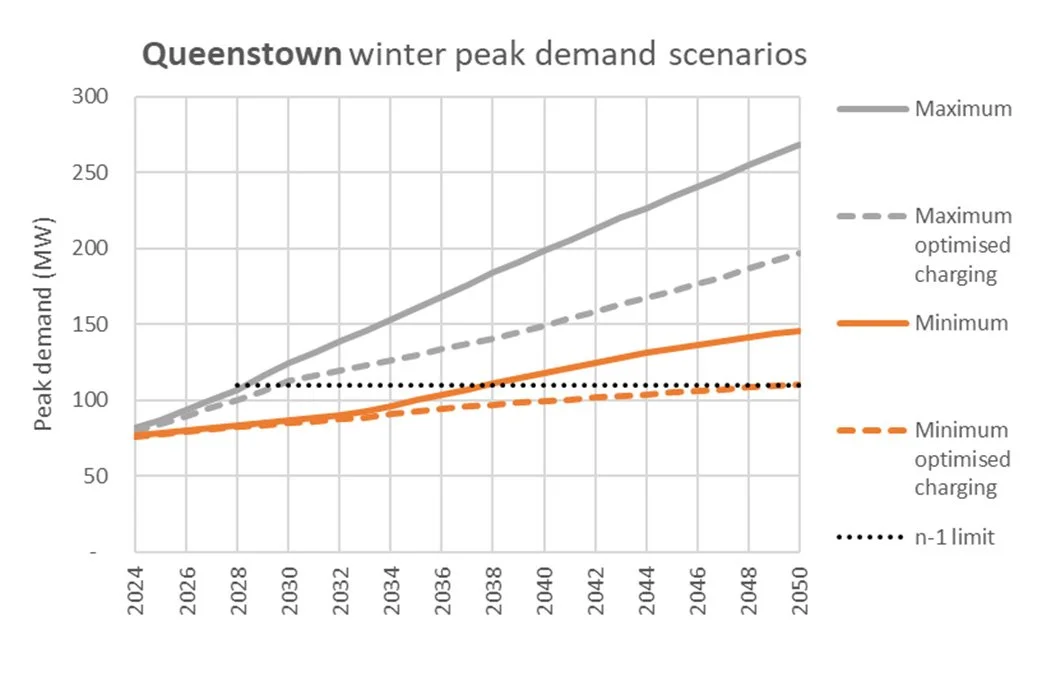
Figure 4: Impacts of flexibility on medium demand scenario
Other flexibility options
In these flexibility scenarios, peak demand growth is slowed, and demand remains within the existing network capacity for a longer period. However, for all scenarios the capacity of the existing network is eventually exceeded. For the midpoint scenario, assuming perfectly optimised charging means that the network constraint exceedance is pushed back from 2032 to 2036.
Other flexibility technologies and load control could also limit peak demand growth by spreading demand throughout the peak day or avoiding consumption.
For example:
The prevalence of household battery storage systems
Shifting consumption from peak times
Curtailing consumption on peak days
With limited ability to influence time-of-day charging from our own regulatory perspectives, we are obliged to invest in the most cost-effective option for consumers in the region.
This, alongside the lack of indication that load will plateau post the 2050 planning horizon and the potential minimal incremental cost of additional capacity, once a decision is made to proceed with investment, we will take demand flexibility into account but propose to continue to base our investment decisions on the ‘no flexibility’ scenario for the purposes of planning for long term future demand.
Generation
Generating local solar, wind and hydro electricity within the region can reduce the need to bring electricity in from outside. Depending on the type, size and location of generation, investments into upgrading the transmission network may be able to be deferred for 2-4 years.
Generation, especially the installation of large scale, industrial battery systems, within the region can also help to increase resilience in the event of a prolonged network fault or extreme weather event.
Currently, two hydro generators are located within the Queenstown region. The location of these generators is shown in the diagram below. These only generate a fraction of the electricity currently required.
Wye Creek Hydro scheme - 1.5 MW
Oxburn Hydro Scheme - 0.5 MW
We have limited knowledge of future potential generation developments in the area beyond those that have submitted a connection application to Transpower, and we would like to hear from anyone planning to install generation above 1 MW within the Queenstown region. This information will assist us with the sizing of our potential investments.
Note that rooftop solar generation is included in the demand forecasts.
Figure 5: Generation in the region
Resilience
The term “resilience”, in relation to an electricity network, refers to the network’s ability to withstand, adapt to, and quickly recover from disruptions while maintaining continuous (or quickly restorable) electricity supply to critical services and consumers.
“Disruptions” describes anything from natural disasters (e.g. storms, earthquakes) to cyber-attacks, equipment failures and operational errors.
Key aspects of resilience
Withstand – the ability to absorb disturbances without large-scale failures
Adapt – the flexibility to adjust operations dynamically in response to disruptions
Recover – speed and effectiveness in restoring normal operations after an outage
Achieving resilience
Achieving resilience requires a combination of technical, operational and strategic measures at transmission, distribution and household level such as:
-
Upgrading physical assets to withstand extreme conditions
Using a mixture of underground and overhead assets
Using mitigations such as interphase conductor spacers in high wind areas
-
Deploying smart grid technologies, including sensors, automation, and real-time monitoring
Advanced Distribution Management Systems (ADMS) to detect and isolate faults quickly
-
Incorporating Distributed Energy Resources (DERs) like solar panels and battery storage
Microgrids/roof top solar can operate independently when the main grid fails, serving critical or household loads
-
Multiple transmission paths and backup generation sources to reroute power
Flexible generation mix (e.g. RENEWABLES, gas and coal fired turbines) to adapt to disruptions
-
Contingency planning, simulation exercises, and rapid repair strategies
Coordination with government agencies and emergency services
-
Safeguarding SCADA systems (which monitor and control systems in real time) and grid communication from cyber threats
-
Weather analytics and predictive maintenance to anticipate and prepare for threats
Although resilience is crucial for maintaining reliability and public safety, there needs to be a balance. Over-investing (that is, building much more infrastructure than we need) can lead to unnecessarily high electricity costs for consumers. Under-investing could lead to frequent or prolonged outages, which would also have an economic impact on consumers and the community.
The Alpine Fault
As part of our planning for a new line through the Queenstown region, we’re examining the impact of potential major earthquakes, specifically AF8 scenarios. These are the likelihood of magnitude 8 earthquakes along the Alpine Fault.
Because Queenstown is relatively close to this fault line, and others such as the Nevis, Cardrona and Wakatipu fault lines, it’s important that any future option allows for these types of natural hazards.
The role of
transmission
The transmission grid is the backbone of Queenstown’s electricity supply. It carries electricity from where it’s generated to where it’s needed—homes, businesses, and essential services. As Queenstown grows and more people switch to electric vehicles and heating, the grid needs to be able to carry more electricity, especially during peak times like cold winter evenings. Without enough capacity, even local generation or rooftop solar can’t guarantee supply when demand is high.
A strong transmission grid also helps keep the lights on when things go wrong. Whether it’s a storm, an equipment fault or a major earthquake, a well-designed grid can reroute electricity and recover quickly. That’s why we’re looking at future upgrades—not just to meet growing demand, but to make sure Queenstown’s electricity supply is reliable and resilient in the face of disruption. These upgrades also give us flexibility to adapt to new technologies and changing needs over time.